This summer, I attended the 15th National Assembly of the…
Bp Miller’s Musings: Triduum
You cannot have Easter without Good Friday.
I have heard and said these words more often than I can remember. Sometimes I have said them in frustration at those whom I knew I would only see on that one Sunday each year, dressed in their finest—the ones I would hardly recognize and yet was supposed to remember and greet with “Happy Easter!” How self-righteous of me to think that somehow my attendance at Holy Week services somehow prepared me to celebrate the Resurrection better than those who were absent.
This year, on the morning of Maundy Thursday, I read from Lamentations (2:10-18). I found myself reading these verses with new eyes and hearing them with new ears; and what I read and heard convicted me of my arrogance, my sin. As if a veil was lifted from my eyes, I suddenly saw in these verses the suffering brought about by wanton abuse of power.
The elders of daughter Zion sit on the ground in silence …
the young girls of Jerusalem have bowed their heads to the ground.
My eyes are spent with weeping; …
because infants and babes faint in the streets of the city.
They cry to their mothers, “Where is bread and wine?”
as they faint like the wounded in the streets of the city,
as their life is poured out on their mothers’ bosom.
All your enemies open their mouths against you;
they hiss, they gnash their teeth, they cry: “We have devoured her!
Ah, this is the day we longed for; at last we have seen it!”
As I read these words, written in the context of ancient Israel’s defeat and exile by the Babylonians, I began to see a different people. I pictured Palestinians in Israeli occupied Gaza and the West Bank, Lebanese crowded into Beirut, Iranians, Ukrainians, Sudanese, Cubans, Haitians. I saw the bombed-out buildings and rubble of cities destroyed by aerial assault. I saw the starving children victimized by war’s violence, dying in their mothers’ bosom.
I heard the victorious cries of world leaders as they exercise the strength of their nations’ militaries, laying claim to the adage: “Might makes right.” And I heard the deafening silence of those like me who timidly watch these events, not speaking out for fear of backlash or some unforeseen harm. Then, I knew the real meaning of the words I had spoken so often.
Resurrection is not for those who have power; nor is it for those who tacitly accept the abuses enacted in their name. Resurrection is for those who struggle to live under the trampling boots of the mighty, those who cry, “Where is bread and wine?” as their life is poured out in the street. Resurrection is for those who are good as dead in the eyes of the world, who don’t deserve a second glance amid the battles for power.
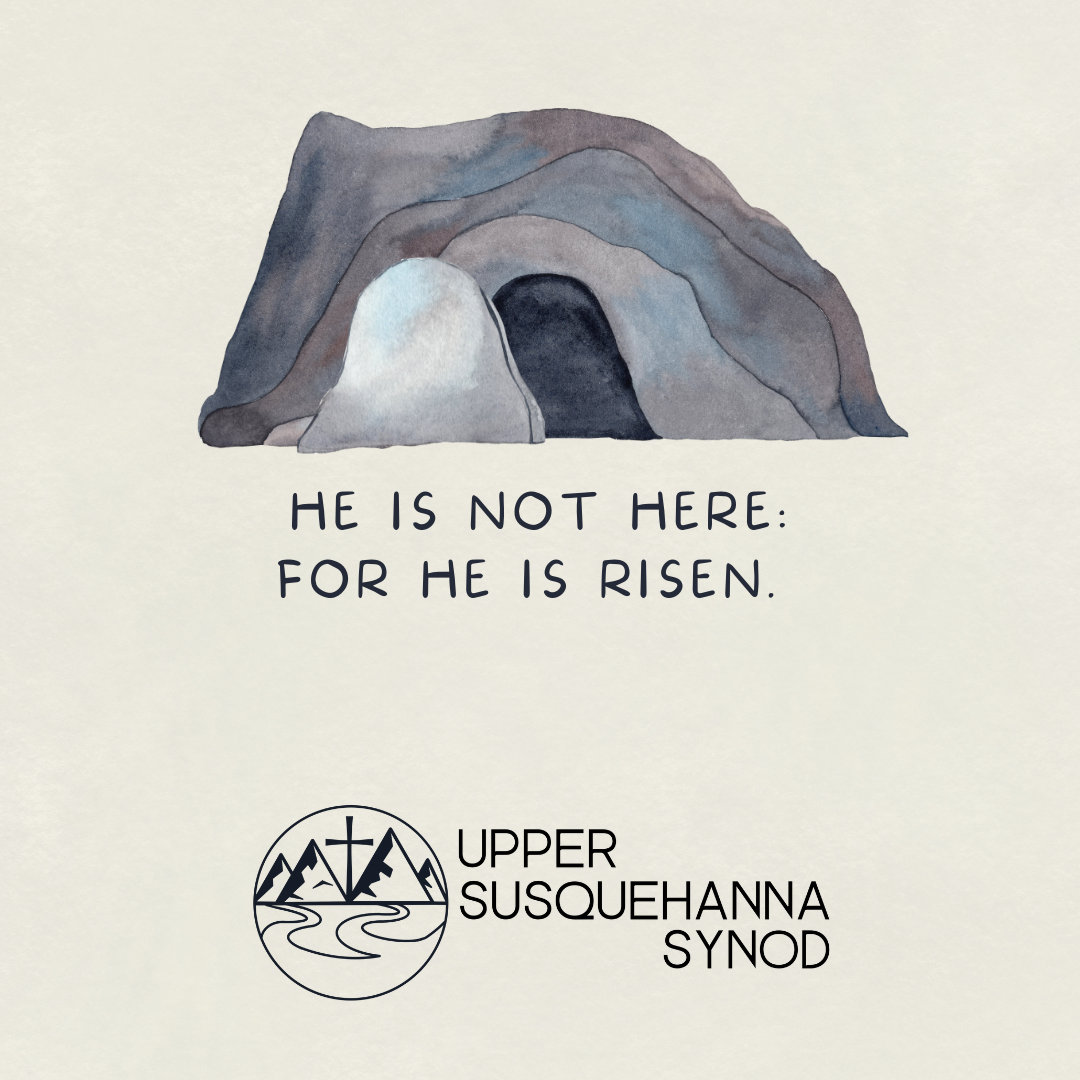
The powers and principalities of this world crucified Jesus because he dared to give hope to those who suffered under occupation and oppression. His death on the cross was meant to put to rest any idea that the world could be different. The stone rolled over his tomb was to be the final word on who had power over life and death. Roman rule was right because Rome had the might of arms to enforce it, and those who disagreed would be disposed of in the same way as this Jesus.
“Ah, this is the day we have longed for; at last we have seen it!”
These words spoken over the destroyed nation of Israel, echoed today by our own leaders as they exploit military power, bring to my mind our Easter Psalm. Spoken in a different context, the Psalmist gives thanks for God’s victory over the powers of death and the grave: “This is the day that the Lord has made; let us rejoice and be glad in it.”
This Psalm begins with the reminder that God’s “steadfast love endures forever.” Thus, “It is better to take refuge in the Lord than to put confidence in mortals […] than to put confidence in in princes.” The way out of suffering is not through acts of violence, not through economic or military might, but through trust in God alone. Against our tendency to place our faith in economic, military, and cultural strength, Martin Luther, in his Small Catechism, says that “[w]e must fear, love and trust in God above all things.” To do otherwise is idolatry.
Trust in God leads us to look upon our neighbors with the same love we would have for ourselves. Rather than lashing out, we embrace. Rather than raining down destruction, we provide food as God rained down manna from heaven. Rather than push aside or expel, we set a table of welcome and a place of shelter. In this way, we proclaim the love to which our Lord commands his disciples after humbly washing their feet. In this way, we join ourselves to the “least of these” who suffer the abuses of this world’s power structures. We die with Christ and are made ready for the resurrection.
I pray on this Triduum that as the sun rises on Easter morning and we make our way to our altars, we will each encounter the crucified Lord and, with eyes of faith opened, see him for who he truly is, our teacher, our master, the Savior of the world, the one in whom we put our trust above all things.
Related Posts